VISITATION POLICY AND PROCEDURES...
Policy:
It is our policy to ensure safe visitation to our residents consistent with the resident “Bill of Rights” F.S. 429.28. In addition to educating employees and visitors of residents on procedures related to infection control.
| 1. | We will ensure that in person visitation will be allowed in all the following circumstances unless the resident objects: | ||
| a. | End-of-life situations. | ||
| b. | A resident who was living with family before being admitted to the Facility is struggling with the change in environment and lack of in-person family support. | ||
| C. | The resident is making one or more major medical decisions. | ||
| d. | A resident is experiencing emotional distress or grieving the loss of a friend or family member who recently died. | ||
| e. | A resident needs cueing or encouragement to eat or drink which was previously provided by a family member or a caregiver. | ||
| f. | A resident who used to talk and interact with others is seldom speaking. | ||
| 2. | The administrator is designated as the person responsible for ensuring that employees adhere to the visitation policies and procedures. | ||
| 3. | Residents may also designate a visitor who is a family member, friend, guardian, or other individual as an essential caregiver. The essential caregiver is allowed to have in-person visitation for at least 2 hours daily in addition to any other visit authorized by the Facility but does not have to provide necessary care. | ||
| 4. | The Facility will respect the right of the resident to determine the number of visitors he/she would like to have at any given time during the 9am-9pm visiting hours. | ||
| 5. | A staff member is designated to support infection control and prevention by providing information on the visitation policy to the visitors. | ||
| 6. | Visitations are from 9am-9pm, at a minimum. Visitors requesting to come any other time need to make arrangements with the administrator or designee in advance. | ||
| 7. | The Facility will not require visitors to provide proof of vaccination. | ||
| 8. | All visitors must sign in/out. | ||
| 9. | Consensual physical contact between patients and their loved ones will not be restricted. | ||
| 10. | Visits are done throughout the building. | ||
| 11. | Children must be always supervised by an adult. | ||
| 12. | All visitors will be asked to agree to follow this policy. | ||
| 13. | All visitors, employees and residents must follow the INFECTION CONTROL POLICIES AND PROCEDURES POLICY. (See below) | ||
| 14. | The administrator or designee may suspend in-person visitation of a specific visitor in case of violation of the provider’s policy and procedures on visitation. | ||
| 15. | INFECTION CONTROL & HAND HYGIENE POLICIES AND PROCEDURES | ||
Policy
It is the policy of Patrick Manor Assisted Living Facility, pursuant to Rule 59A-36.007(10), F.A.C.to provide services in a manner that reduces the risk of transmission of infectious diseases. This facility implemented an Infection Control and Hand Hygiene Program. Infection Control includes all those activities to prevent or limit the spread of diseases. Infection control measures are safety measures. Standard Precautions is the basis of Infection Control and are used for all patient care. They're based on a risk assessment and make use of common-sense practices and personal protective equipment that protect from infection and prevent the spread of infection from patient to patient. Hand hygiene may include the use of alcohol-based rubs, antiseptic hand wash, and/or hand washing with soap and water. This is the single most important means of preventing the spread of infections in the facility.
Procedures
| A. | Infection Control includes the following Special Precautions: | ||
| 1. | Perform hand hygiene | ||
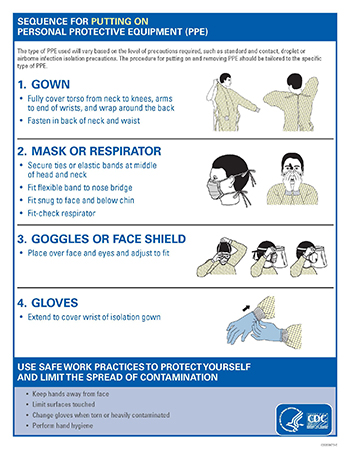
| 2. | Use personal protective equipment (PPE) whenever there is an expectation of possible exposure to infectious material | ||
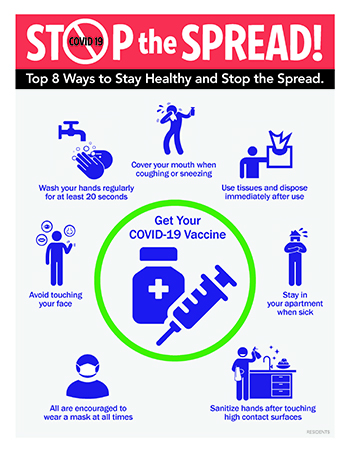
| 3. | Follow respiratory hygiene/cough etiquette principles | ||
| 4. | Ensure appropriate patient placement | ||
| 5. | Properly handle and properly clean and disinfect patient care equipment and instruments/devices | ||
| 6. | Clean and disinfect the environment appropriately | ||
| 7. | Handle textiles and laundry carefully | ||
| 8. | Ensure healthcare worker safety including proper handling of needles and other | ||
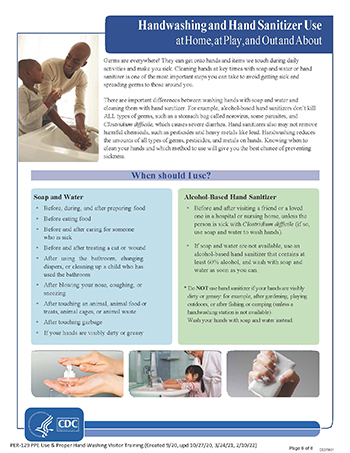
| B. | Employee’s hands must be washed for at least 20 seconds using soap and water. | ||
| 1. | Before and after the provision of personal services to residents. | ||
| 2. | After contact with blood, body fluids, or visibly contaminated surfaces. | ||
| 3. | After contact with objects and surfaces in the resident's environment. | ||
| 4. | After removing Personal Protective Equipment (gloves, gown, facemask, eye protection, etc.). | ||
| 5. | After using the restroom. | ||
| 6. | After blowing one's nose, sneezing, or coughing. | ||
| 7. | Before eating or preparing food. | ||
| 8. | When their hands are visibly soiled. | ||
| 9. | At the beginning and the end of each shift. | ||
| 10. | After contact with animals or pets. | ||
| C. | Residents should always wash their hands at least 20 seconds using soap and water (The combination of soap and water, friction and time is essential to any good hand washing procedure) | ||
| 1. | Before meals. | ||
| 2. | After toileting. | ||
| D. | Standard precautions must be used when there is an anticipated exposure to transmissible infectious agents in blood, body fluids, secretions, excretions, no intact skin, and mucous membranes during the provision of personal services. Standard precautions include hand hygiene, and dependent upon the exposure, the use of gloves, gown, facemask, eye protection, and/or a face shield. | ||
| E. | Provide access to alcohol-based hand sanitizer with 60-95% alcohol throughout the facility in every resident room and common areas. If there are shortages of alcohol-based hand sanitizer, hand hygiene using liquid soap and water is still expected. Keep sinks stocked with liquid soap and disposable paper towels. |
||
| F. | Communicate to residents about what they need to do - such as social distancing, wearing a cloth face covering or facemask, informing personnel immediately if they feel ill, importance of washing their hands, avoiding touching their face, and cough etiquette. | ||
| G. | Actively screening any individual that is permitted to enter for symptoms of COMMUNICABLE DISEASE. For those visitors permitted entry, they will be instructed to perform hand washing or sanitizing; should maintain social distancing, limit their interactions with others in the facility; restrict their visit to the resident's room or other location designated by the facility; and encourage wearing a facemask, face shield and proper PPE. Visitors will be advised to monitor for signs and symptoms of COMMUNICABLE DISEASE during or after their visit so that appropriate actions can be taken by the facility. |
||
| H. | Provide EPA-registered disinfectants so that commonly used surfaces can be wiped down. Routinely (at least once per shift) clean and disinfect surfaces and objects that are frequently touched in common areas (door handles, faucets, toilet handles, light switches, handrails, countertops, chairs, tables, remote controls, shared electronic equipment). | ||
| I. | The facility must clean and disinfect reusable medical equipment and communal assistive devices that have been designed for use by multiple residents before and after each use according to the manufacturer's recommendations. | ||
| J. | Visitors should be aware that these safety measures are for their safety, residents' safety, and the safety of team members. | ||
| K. | The Managing Administrator of Patrick Manor Assisted Living Facility is the staff member designated to contact with questions. | ||